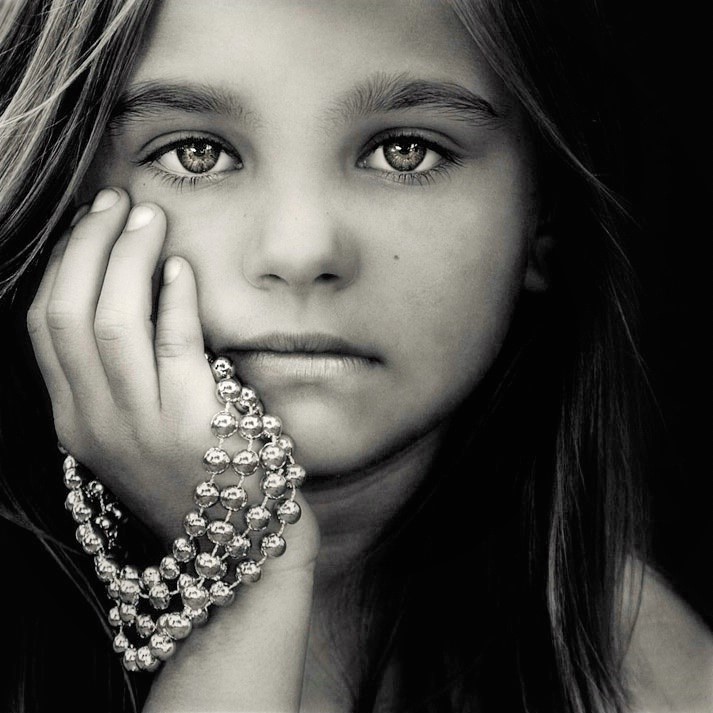
Protégée

No real drama this time, only more of the relationship between Damien and Cécile.

.

That evening, after the conference, Cécile came out onto the balcony where Damian leaned on the parapet looking out over the valley below. The glow of hearth and cooking fires lay scattered across the land, showing a peaceful, close-knit community. She rested her arms on it as well, content to watch with him in companionable silence, but after a while she spoke without turning her head.

“I meant what I said.”

The silence afterward held so long that she thought he might not have heard, but then, “I know,” he said. “So did I.” It was that simple; a settling-in of friendship that picks up on a conversation as if only moments had passed between instead of months, and miles, and pain. Then again, after a while, “Why?”

“I see in her the future of Martagne,” Cécile said quietly. “Kindness. Gentleness. Compassion. Strength.” Again a pause, then, “It won’t be like you.”

Damien laughed once, softly, and said, fervently, “Oh, I hope not.” He shook his head once, and the torchlight slid across the slight smile on his lips.

Cécile laughed once as well, turning her face toward him. “I just don’t see myself riding desperately across the countryside—” She broke off and laughed again in gentle self-mockery, “Yet did we not just do that?” She shook her head and went on. “What I mean is that I don’t see myself crossing borders and spying so much as being her confidante and bodyguard.”

Again his smile flashed in the night. “One needn’t be a spy to be in the Intelligence Service. I’m sure you are aware how much information you can gather just going about your daily duties. People let fall the most amazing things if you just pay attention.” He tilted his head, watching her. “Did you know that just this morning the cook’s second assistant was found fast asleep in the chicken coop, curled around all the eggs like a broody hen? Stark naked.”

Cécile couldn’t help it, she laughed outright in shocked amusement.

“It’s true,” he said, straight-faced, and turned to her, leaning one elbow on the parapet. “The hardest thing to learn is how to appear to not be listening.” His smile faded after a moment. “Bodyguard,” he murmured. “That’s a different set of skills entirely.” He looked straight into her eyes, and his expression was solemn and more than a little sad. “Are you willing to kill to protect her?”

She returned his gaze as directly. “You may recall I have already done so.”

“True enough,” he murmured, gazing down at the ground somewhere between them.

“Teach me,” she said.

He looked up at her from under his brows. “You are sure?”

“I am,” she said.

He nodded once. “So be it.”

* * *

Anno Regni Gloriane Regina Aureae VIII

Sometimes in writing a story scenes come to mind that are part of a character’s history, but not a part of the current story. But sometimes those scenes demand to be written; the character demands to be heard. This is one of those. It may not be part of this story, but it is part of what made the character who he is. I think that merits recognition.

Anno Regni Gloriane Regina Aureae VIII

Their tormentors had left the room for a while; whatever the reason, it was of no matter. Damien went to work.

Bellarmée had taught him many tricks over the years, tricks that became habits and then second nature. Tricks like how to dislocate a finger, a shoulder, to be able to escape his bonds. The blood from the many cuts on his arms only helped, making his hand slick enough to slide out of the ropes more easily. Tricks like how to hide a tiny blade, no longer than his little finger, in the braids at the back of his neck. A tiny blade, razor sharp. Just long enough to cut a rope—or a throat.

“Boy.”

Damien’s eyes snapped to the man bound in the chair in the middle of the room. His mentor, Bellarmée. The man’s voice was hoarse, a rough whisper, made so by screaming in pain from the torture he had been subject to.

“M’ser.” Damien went to him instantly, and used the tiny knife to cut the ropes that bound the man. But when he went to cut the ropes on Bellarmée’s ankles, his mentor put a hand on his shoulder.

“Don’t bother, boy,” Bellarmée said. “You have to get out of here. Get out, and go back to Martagne. Kill them if you can, but go.” He took a sharp, harsh breath, and tried to stifle a bout of coughing. “This mission is over. We’ve failed.” When Damien started to protest, Bellarmée raised a hand and the boy stopped in mid-word. “It happens, boy. Take the loss and learn from it.”

He leaned against the back of the chair for a few moments, just breathing. Harsh, painful, wheezing breaths. His eyes drifted closed for a moment, and then he shook his head and looked at Damien. “You have to get out of here,” he said again. “Martagne will need you in the coming years. Boy,” he said, then shook his head and corrected himself. “Damien. You will be leaving me here. No!” he said sharply, shutting Damien down again. “They cut the tendons in my heels. I could never have walked out of here. And you know that I am dying anyway, from the wasting sickness, the cancer.” He put his hand on the boy’s shoulder as Damien knelt in front of him, looking up into his eyes. “You must kill me. I cannot survive this, I can withstand no more. And I cannot be left alive for another group to try their hand. What I know, the Brekken must never have.” He paused a moment, then went on, softly. “It will be a better death than either of those.”

Bellarmée raised a shaking hand and pointed over to the corner of the room. “They put all our things over there. When you are done, take what you need. Take my knife, it is yours now. Take any papers you find, and go home. Maybe there will be something there of use.” Then he pointed to the other side of the room. “There is kerosene there, for the lamps. Use it to destroy what else is here, so others won’t know what might be missing.” He looked down into Damien’s eyes for a long moment. His mouth worked, chewing on words that would never be said, but then he cleared his throat. “I’m proud of you, son. You’ve done well, always. But now there’s no more time, they could come back at any moment.” Then he put his hand on Damien’s shoulder once more, and squeezed. “Your little knife will be enough for this,” he said, and then put a finger on his neck, just below the point of his jaw. “Here. I’ve shown you this before.”

Damien shook his head, looking up into his eyes, his own gone dark, all pupil ringed with palest blue.

Bellarmée shook his head, too. “Do it, boy,” he said gently, “If they come back it will be too late. Do what you have to do, boy. Just do what you have to do.”

For a moment, the muscles in Damien’s face quivered, and then all emotion was wiped away, going to a still calm as Bellarmée had taught him. Damien rose and went behind the chair and stood for a moment, then reached around with one hand and covered Bellarmée’s eyes. His mentor reached up and took his hand away, then folded Damien’s fingers within his own. Another moment, and Damien bent and pressed a kiss on the top of Bellarmée’s head. And at the same time thrust the tiny knife home.

Bellarmée stiffened under his hands, then let himself relax as the blood flowed. Damien thought he heard him say, “Good boy…” on a long breath, and then a few long moments later Bellarmée’s hand let go of his and slid to his lap.

Damien stepped forward and knelt, cutting the last bonds at his mentor’s feet, then lifted him from the chair and laid him on the floor, away from all the blood. He closed Bellarmée’s eyes, and crossed his hands over his bare chest, then found a cloth in one corner and covered his body. He cleaned off the little knife and put it back where it belonged. Then he went to the corner Bellarmée had indicated and found his knife: a slim, double-edged stiletto with a razor-sharp blade as long as his hand and a silver hilt carved with the lilies and crown of Martagne, a gift, he knew, from the old Queen, Aurelie.

And then Damien went and made a space for himself under the stairs, standing utterly motionless, waiting for their tormentors to come back for them.

* * *

The first man came down the stairs, stamping his feet to make sure their captives knew he was coming and were properly cowed. But when he saw the body on the floor, and the pool of blood, he shouted an alarm back up the stairs, calling for the others. He turned back and started to take the steps two at a time—giving Damien the perfect opportunity.

Damien lunged and thrust the knife through the open-backed stairs, slicing across the inside of the man’s thigh, cutting deep and severing the great artery that lay beneath. The man shrieked in pain and terror, falling back down the stairs to bleed and die at their feet.

Damien ducked back into the shadows beneath the stairs, and waited for the next few men. He let the first three pass; one stopped at the bottom to check the one dying below, while the others piled up together behind him, gawking at the blood and the body to the side. When the fourth man started down the steps, Damien reached out and slashed across the tendon above his heel, crippling him. The man tripped and shouted with pain, overbalancing and toppling the others under him.

Then it was a dark dance, there in that little, windowless room, where Damien flitted between partners with that knife flashing silver, save that the partners fell and never rose again and red hung in the air in his wake. Screams and groans sounded in his ears, snarls and curses and gasps.

The sixth man had started down the steps, holding a pistol. He watched in disbelief as the slender, long-haired boy wrought a dance of death, and tried to bring the pistol to bear as the last man fell. But Bellarmée had trained Damien in that dance for seven years, and even as the man fired at him the silver knife bloomed in his throat and he fell like the toppling of a tree.

The bullet passed under Damien’s arm as he threw, cutting the flesh for a few inches, and kissing the rib beneath. Damien hissed as he raised his arm to look, but ignored it after. He would survive.

He stood in the room for several moments, looking around at what he had done. Then he cleaned the silver knife and found its sheath in the pile in the corner. It was all calm now, inside and out, just stillness. There was no anger, no hate. No remorse, only sorrow, and a regret great enough to fill an ocean. Sorrow at the loss of his mentor, the only father he had ever known, and regret at the need to kill.

Then Damien moved. He went around the room and dipped his hand into the blood of each man he had killed, until it was coated to the wrist. Then he went and crouched beside the body of his mentor. With his cleaner hand he pulled back the cloth covering Bellarmée’s body, and laid his other palm in the center of Bellarmée’s bare chest so the blood of his tormentors mingled with that of the wounds they had inflicted, as if to let him know he had been avenged.

Then he found a cloth and wiped all their blood off his hand, and went to the pool of the blood he had shed by killing Bellarmée. Once again he dipped his hand, but this time he laid it on his own bare chest, over his heart. Only then did he wipe off his hand and go to do what Bellarmée had told him to do.

There was one more thing he did before he left. He took the tiny knife and its sheath out of its hiding place in his braids. Took the knife and cut off each braid, one by one; cut them short, close to his head, then ran his fingers through his hair to loosen the final knots. He gathered all the braids and tied them together with the thong that held the sheath, and laid the bundle under Bellarmée’s hands. He would not ever use that knife again; it would dishonor the man whose life he had taken. The braids he left as well, as a sign that he left his youth behind.

When he left, the smoke was already rising high and black into the night from the old wooden warehouse. He wore as many layers of clothing as he could find against the cold, and over all the heavy greatcoat Bellarmée always used to wear. And over his shoulder he slung a battered leather scrip stuffed full of papers, his and Bellarmée’s kits, and some food he had found in the rooms upstairs from where they had been held.

He was only fourteen years old.

* * *

Twelve Years Ago

12 years ago

Damien

Damien was headed back to his rented rooms after meeting with his contact. The papers were safe in his scrip, and tomorrow he would head back to Martagne. But for tonight, he was weary and just wanted to rest. It had been a very long ride… He turned down the allée that led to the street where his rooms were, thinking about what he would need to do when he got back home.

Three young men turned into the allée, coming toward him. Always vigilant, he noted what he saw: all three about his age, early to mid twenties or thereabouts, decently dressed but not expensively, lower middle-class. Students, perhaps. Calm, relaxed, confident; speaking among themselves as friends, with no particular attention paid to him. No evident threat.

Until suddenly they spread out across the allée in front of him.

Damien stopped, head up, and took his hands out of his pockets, spread them. “I don’t want trouble, zehrs. I’m tired, I’m just heading home, if you’ll let me pass.”

“Don’t want trouble, ey, my boys?” the middle one said, and flicked out a hand, tapping his neighbor on the arm.

“Won’t be no trouble, then,” said the other, “ye just give us what ye got in that baggage, ey?”

“It’s only papers from the University, zehrs,” Damien said, “valuable only to me for my studies. But I’ll give you my purse if you just let me pass.”

“Give us your purse, ye will, pichon,” said the third, “and the bag as well.” Suddenly all pretense at friendliness was gone. “Give it now,” he growled.

The middle one stepped forward, reaching for the strap across Damien’s chest. But Damien unexpectedly stepped in to meet him, grasping his forearm and pulling him forward off balance into the third man’s way. Damien kicked out and caught the one on his left in the chest, throwing him back off his feet, whooping and gasping for breath. On the rebound, Damien hopped and kicked back with his other foot, squarely into the crotch of the man on his right. The man folded to his knees with an agonized groan.

Too late, Damien realized a fourth man had come up behind him. That one clubbed him across the head with a backfist like a sledgehammer; the blow lifted Damien off his feet and across the allée. He hit the wall from skull to hip and dropped like a stone.

* * *

Marczyn

Marczyn Rettig was headed home from the University library when he heard a scuffle in the allée ahead. He ran forward and peered around the corner, and saw three, no, four thugs all setting on another, smaller man. That one put down two of the thugs and turned on the third, only to be put down himself from behind by the fourth with a punch so hard it tossed him across the allée like a rag. The two still standing laid into the prone man, kicking him in the ribs, the back, the belly, wherever their feet could reach.

Marczyn spun and ran for the Guard call box that stood on nearly every corner, yanking down the pull switch that would send a signal to the nearest Guard Station. Then he ran back to the head of the allée. “HOI! Leave off, you roughies,” he shouted in his deepest, gruffest voice, to sound older and more imposing. “I called the Guard, so clear off if you don’t want to spend your days in gaol!”

The downed thugs growled in response but they climbed to their feet to go, one of them snatching the scrip from the fallen man as he went. But as the fourth ruffian turned to leave he kicked the man viciously, twice more—once in the belly and once in the head. The man only slumped further, limp and unconscious. Enraged, Marczyn stooped and snatched up a rock from the ground, and threw it as hard as he could. It hit square in the back of the big man’s skull, dropping him in his tracks. His fellows picked him up and hurriedly dragged him off as the Guard’s whistles sounded down the street.

Marczyn gave the Guard his report of what had happened in the allée. They were kind enough to call a cab for him, and saw them off to the Hospital. Now he regarded the poor fellow being treated in the hospital wardroom. His face was bruised near as black as his hair, his pale blue irises shining out of sclera red with blood. The doctor had stabilized his broken ribs, and now an attendant was wrapping them with bandages to support them.

“How do they feel?” Marczyn gestured toward his ribs.

“Rather like a badger is trying to claw its way out from inside,” the man replied with a wry smile. His voice was breathy, not wanting to put too much pressure against the broken bits. “Thank you for helping me,” he said after a moment. “I wouldn’t give much for my chances if you had not.”

Marczyn waved it away. “No need,” he answered, “I hope someone would do the like for me.” He put his wallet back in his vest. Marczyn’s family was solid middle-class, able to support him while he studied at the University of Brekke, and he also held a mid-level position as a clerk in one of the ministerial offices when he was not at his lectures, so he was able to pay for the man’s treatment once they realized he had also been robbed. At least the thugs had not had time to steal his travel papers! Marczyn had found them in the inside pocket of the man’s coat; the orderly had handed it to him to hold while they cared for the man.

And then they had learned the extent of this disaster—the blows to his head had knocked the memory quite out of him. He could speak, quite clearly, though his jaw was swollen; he could think, asking good questions of the doctor about his course of treatment. He remembered somewhat of the scuffle, but his name and his home, his self—all those were gone from him.

Dear God, Marczyn thought, the look in the man’s eyes, the utterly hollow, bereft look as he realized what had been taken from him! A look like a heartbroken child, to have lost all he had known, his family, his friends, his home, everything in one moment. That look tore at him, hurt his heart and lodged in the pit of his stomach…

On impulse, he blurted out, “You will come home with me, friend!” And in response to the near-reflexive headshake, Marczyn said, “I do not take no for an answer. The doctor says that you will regain what you have lost, but until that time, where and how shall you live? You have no place to stay, that you know of, no employment, no funds.” He raised his hands palm up. “Zo,” he said, “It is settled. Your papers have your name, Charles Banford. And now you have a place.” He held out his hand, gesturing, “ Come. Come home with me.”

* * *

Charles

Two weeks before he could move without pain from his ribs. Another two before he could think of lifting anything much heavier than Marczyn’s cat—not that the creature was anything of a lightweight. But by then Charles was able to take a position at the Ministry where Marczyn worked, doing bookkeeping and filing. That at least gave him something to do besides brood over his lost memory. When he was alone it was like worrying at a lost tooth, an insistent presence—or rather, absence—that was a constant pain in the back of his mind. It shadowed everything.

Once they both were finished for the day, though, the two were constantly together, and his mood was so much brighter. Marczyn was a true scholar, avid to learn everything he could, with an infectious enthusiasm for it all that Charles could not help but share. They became like brothers, both of an age, two University students in the best part of their lives. Charles’ different perspective, his shrewd reading of others and ability to put himself in their place, his startlingly wide trove of knowledge, and his facility with languages helped Marczyn with his studies, and the two spent hours at home or in the pubs discussing politics, ideals, ideas, the state of Brekke, the Directors, and how they would run the nation if they were in charge. It was a young man’s dream—except when the nightmares came for Charles.

In the night, it was different; images of horror haunted him. Fights, where he seemed to flit between opponents like changing partners in a dance, save that the partners fell and never rose again and red hung in the air in his wake. Screams and groans sounded in his ears, snarls and curses and gasps. But always it was not anger or malice that filled the dreams, but sorrow; a regret great enough to fill an ocean. And a gruff voice sounding in his brain, “Do what has to be done, boy. Just do what has to be done.”

Then he would wake with tears on his face, and the regret filling his heart, but never enough of a memory to understand why. Was it his hand that held the knife? Or was he just a witness?

* * *

His memory was returning, as the doctor had promised, but far too slow for his wishes. Month after month, waiting, hoping. There was a desperation in him, a fear, as if he knew some disaster awaited if he did not once again take his proper place in the world.

Sometimes there would be a new memory; tantalizing, teasing, but without context they had no meaning. He was greedy for them, like a hoard of bright, shining coins doled out to him one at a time: beautiful to hold, but not enough to buy his freedom, and he would break down and weep again for his loss. At those times, Marczyn would hold onto him, brother to brother, until he could breathe again.

Save for that, those six months living with Marczyn while he recovered from his injuries and after were the happiest of his life, even though he knew that somewhere he had another life, an important one he urgently had to get back to, if only he could remember what it was.

Until one day he turned and tripped over the cat. Crockery flew everywhere, and he sprawled on the floor and hit his head again—and it triggered the flood of memories.

Marczyn came running in at the sound of the crash, in time to see Charles raise his head and scream in agony—scream out a name, one name, as if it meant everything in the world to him: “Gloriane!

And then he dropped his head into his arms and wept.

This time it was different, though. Where before the tears were only of grief and loss, these were also tears of—not joy, never that, but at last, of some kind of relief. Marczyn came and knelt amid the broken crockery, and laid his hand on Charles’ back, and knew the difference. Knew that the memories had returned, though what that would mean he had no idea.

They stayed like that for some time, Marczyn just being there, just a presence, letting Charles know he was not alone, whatever would come next.

After a while Charles raised his head again, his long hair hanging like a veil between them, hiding his face, and he nodded. Then the two rose and silently cleaned up the broken dishes. When they were done, Charles went into the sitting room and sank down on the sofa, arms loose across his knees, staring into the fire.

Marczyn came and sat down next to him. “Gloriane?” he asked quietly, “As in Gloriane, the Queen of Martagne?”

Charles simply nodded—but Marczyn knew it wasn’t Charles, not any longer. This was someone new.

“You’re not Brekken,” Marczyn said.

“Half,” Charles replied. “From over-mountain.” His voice was soft, with some emotion Marczyn couldn’t identify.

Marczyn nodded. “Same,” he said, “Brekke-side.” And then he waited, silent, for whatever Charles would tell him.

The pause was long, while Charles stared into the flames in the fireplace, his hair fallen about his face, hiding his expression. But at last he took a great breath and raised his head. He pushed back his hair with both hands, then let them fall in a helpless gesture as he sat back on the sofa and looked somewhat aside at Marczyn, not meeting his eyes. “I am in your hands,” he said quietly, “if I tell you anything.”

“With that one name, I think I might make a guess,” Marczyn said. “My hands are open, friend. After all this time, I think I know the truth of you. I would not hold you, even if I should.”

Charles looked aside at him again, this time meeting his eyes, and he nodded, then looked away. “My name is Damien Ring, and I am a spy for Queen Gloriane. For Martagne.” Now it was his turn to wait.

Marczyn nodded. Then he asked, simply, “Why?” Not a challenge; just clarification.

Damien shook his head with a wry smile. “Brekke—frightens us. You are—” He shook his head again, and corrected himself. “Your government, the Directors, they are angry, greedy, fearful men. They want. They want more and more. They want what they do not have, they want what others have.” He turned and looked at Marczyn, angling his body to face him more directly. “You and I, we have discussed this. Over and over, how their greed and anger is ruining Brekke, how their fear and distrust of their own people is bringing out the same in all of you. Already some of you have begun to denounce their neighbors, to gain but the smallest advantage. That will only continue, and grow. And if the Directors fear you, their own people, that they know, how much more do they fear and mistrust Martagne? There we are, hiding behind our mountains, what might we be plotting to their detriment?” Again he made that helpless gesture with his hands. “So we seek information, knowledge, to protect ourselves. Knowledge is power.” Again he shook his head. “Martagne is not aggressive. It is not in our nature to seek advantage over others, we are content with what we have and what we do. We make our gains with our own labor. And we want only peaceful relations with our neighbors. Profitable trade for both sides. Mutual assistance at need.

“We have not your technology. No airships. Wireless radio and trains, looms and farm machinery are the extent for our needs. Our weapons are the equal of yours, but for all the size of our kingdom, our army is smaller. Your army stands as much against your own citizens as against any outside enemy—which we are not, though your Directors would have you believe it so.

“Oh, make no mistake—we would fight fiercely against an attacker like you. But it would be a very short war, and we would lose—at first. And then a long, bloody train of skirmishes and sabotage that would last until you broke us or we made it too costly for you to stay.

“But we would far rather defend ourselves passively, by taking measures to protect ourselves before something becomes an issue and tips the balance. Having information in advance helps us to do that.” Again the wry smile. “Forewarned is forearmed.” And then again he waited.

Marczyn gusted a breath, frowning down at his hands. After a few moments he turned them over, and suddenly clenched them into fists, clenched them tight and frowned fiercely at them—and then let them loose and fall to his lap again. He took a breath, then turned to Damien. “I can help you with that,” he said.

Damien’s lips parted in surprise. Then, “How?”

Now it was Marczyn who gave a wry smile. “You know I work in the Ministry offices,” Damien nodded, waiting. “I can seek another position, perhaps even a promotion, to another office. To the Ministry of Defense, perhaps?”

Damien was stunned. “You would do that for Martagne?”

Marczyn laughed, he couldn’t help it. “For Martagne, not so much, I think. But for you, I would.” He shook his head at the look on Damien’s face. “I said it earlier, after all this time I think I know what kind of man you are. And that man would not twist that information to harm others. Nor would you give your loyalty to one who would.” And then his shoulders relaxed as it all fit together in his mind. “And your loyalty tells me a great deal about your Queen as well.” He took a deep breath, frowning. “And you are right. The Directors are bringing Brekke to ruin. How can I watch them bring down Martagne as well, if I can help prevent it?” Then he laughed, and shoved at Damien’s shoulder. “Maybe this is a sign. Maybe all those conversations weren’t just idealistic rhetoric. Maybe there are things we little folk can do after all. Who knows? Nothing will change if we never try.” Then he nodded decisively, and held out his hand. “Pact?”

Damien took his hand in both of his and clasped it hard. “Pact,” he said.

Marczyn sat back in the sofa. “You’ll be leaving in the morning, I suppose?”

Damien nodded. “I’ve been away far too long, they’ll have thought the worst.” He frowned, thinking. “I’ll have to buy a horse.”

“Take mine,” Marczyn said.

* * *
Prelude to Disaster

One week before:

“Brekke is a powder keg, Gloriane, and the fuse is set. Who knows what will spark the flame?” Damien shook his head, frowning down at his hands clasped on the table. “A revolution is brewing. The people are primed and ready, and I doubt it will be long before their rage erupts. We know that the military will be ordered to act against the citizens, and that will be bloody.” He tapped the table with his clasped hands, and looked up at his Queen, his pale blue eyes shadowed with concern. “The Directors care not a whit for any but themselves. They are planning something, but we have no hint of what it is. Whatever, we think it will be soon.” He spread his hands in a gesture of uncertainty. “My man should have something for me by now.”

“Then go,” Gloriane said quietly. “Learn what you can.” She shook her head as he rose, then looked up. “And Damien—”

He had already bowed and turned to go, but now turned back, hearing an odd note in Gloriane’s voice.

“Be careful, Damien,” she said, meeting his eyes intently, “Be careful. I am… uneasy. Something is very far wrong.”

“I will take care, Your Majesty.” His voice was sober, taking her warning seriously. He laid his hand on his heart and bowed again, then turned and left.

* * *

Damien took the handful of papers from his contact and scanned through them. His hands froze on one, and he read it again, his breath caught in his throat. “You’re sure this is genuine, Marczyn?” he asked hoarsely.

The other man nodded. “I copied it myself. Is it important?”

“Desperately…” Damien said in a fading whisper, then took a sharp breath. “I need a horse.”

“Take mine,” the man said, and gestured across the way to where a horse was tethered.

Damien was already crossing the allée, shoving the papers into his scrip. He mounted up and turned the horse, then tossed a purse to his friend. “They are going to start a war, Marczyn! Take your family, go somewhere safe. Don’t go back there.”

“But—”

Damien put heels to the horse, and it leaped away. “Don’t go back!

* * *

He drove the horse hard, all that day and through the night, his fears riding him just as brutally. He tried to be moderate, tried to keep a sane pace to spare the horse, but the date on that paper pounded in his heart and brain as the horse’s hooves pounded the road. Too late, too late, too late…

It was a gallant beast, and gave all he had and more at Damien’s asking, but nothing could survive the brutal pace he demanded. Damien screamed out his anguish and rage as he felt the horse falter and sink beneath him; he kicked his feet out of the stirrups and jumped free as the horse fell.

He sprawled in the dirt for a moment, stunned, then crawled to the horse that lay dying in the road. “Rest, great heart,” he said, and stroked the horse’s cheek. He took out his knife and severed the great blood vessel in its neck, soothing it and waiting until the harsh breaths stilled and the blood ceased to flow. “I am sorry…”

Then he settled his scrip securely over his shoulder and began to run.

* * *

Within the hour he saw a man riding toward him. When they were close enough, Damien sprang in front of the horse, making it rear. He caught the reins and hauled the man off the horse and down into the dirt. He vaulted up into the saddle, and with two slashes of his knife cut the man’s belongings from behind it, then booted the horse into a dead run.

* * *

He Watches

I thought I’d give you a perspective on Gilliane’s relationship with Damien. This is back when she is about ten years old.

* * *

“I don’t like that man, Maman,” Gilliane said. Gloriane left off brushing her daughter’s golden hair, so like her own, and leaned aside to see her daughter’s face.

“Who, Baron Damien?”

Gilliane nodded, frowning. “He frightens me, Maman.”

Gloriane took her daughter’s shoulders and turned the girl in her lap, the better to see her face. “What is it that frightens you, my dove?”

“He—he watches.”

“He watches?”

Again Gilliane nodded. “He watches. Everything. Everyone. It frightens me. Maman, why does he always watch so hard?”

“That is because he wants to protect me, and everyone I hold dear. Which means your Papa. And you, my little dove. He is the guardian of all I treasure.” She settled Gilliane better in her lap, enfolding her in her arms.

“Baron Damien is the kindest, gentlest, wisest, bravest, most ruthless and savage man I have ever known. I trust him above all others, and you should, too. He is the man who will save you and protect you from all harm, to his last drop of blood. He will do for you whatever needs to be done, no matter the cost to him. Do not let him stain his soul—someday that will be in your charge. He may frighten you, my dove, but he will never fail you.”

The Spymaster

Damien turned the cup around and around in his hands, looking down at nothing, and took a long, quiet breath. “I was born on the Martagne side of the mountains. My mother was raped by a Brekken soldier during one of the final border skirmishes of the war, and I was the result. After that, they called her ‘whore,’ and used her so. Myself, I had no father, and no name. None, at least, until the young Queen rode through our village with her consort on her Progress through the kingdom after her coronation. I must have been about seven, then.

“I hid in the shadows where she would pass, just to see her. I thought myself well hidden, but she saw me anyway. She called me forward, and I came, even though I was afraid that the soldiers would beat me. I came, because I had never seen anyone like her, and I wanted to see—I wanted to see how anyone could be all made of gold and yet be so warm. Her hair a cloud of gold, like early sun through the mist on the mill-pond, all dressed in gold like an angel wrapped in sunlight…” His voice was soft with memory. “She asked my name, but I had none, so I said nothing, She leaned low from her horse, to see me better, and asked again. ‘What do they call you, boy?’ Well, they did call me something, so I told her. ‘Damn-ye,’ I said. For years, I thought she misunderstood, but then I knew she simply meant to be kind. ‘Damien,’ she said, and smiled. ‘A good, strong name for a sturdy lad.’ And then she took a ring from her finger, and handed it down to me.” He tilted his hand, and the firelight glinted on the fine gold ring on the smallest joint of his little finger.

“I took my name from that,” he said. “Damien, from the name she spoke, and Ring for the gift she gave me.” He smiled briefly, but the smile faded, and he took a sip from the cup in his hands. When he spoke again, his voice was stronger and lighter, more matter-of-fact. “Of course, I followed her. How could I not? I followed after, running as hard and as long as I could. And on the third day, I was taken by one of the soldiers. Taken—and taken in. That was Bellarmée,” he said, and his eyes gleamed in the firelight as he looked up at them.

“Mother’s first Spymaster,” Gilliane murmured, and he nodded.

“He took me in, and taught me, and trained me to be a spy for the Golden Queen.”

“And you’ve served her ever since.”

Again he nodded, but he turned his eyes downward again. “Her and only her,” he said, and sighed. “For seventeen years I served her faithfully and well, and never failed her once—until now.” There was a depth of bitter rage in those two words; rage, and a hatred turned in on himself.

“You could not have known!” Gilliane said, but he cut her off, and the firelight glittered against the ice in his pale blue eyes.

“I did know!” he said, the sound raw as a knife in the dark. “I knew, and was riding back with that news to warn her. I knew, but I stopped to rest. An hour only, I thought. To rest the horse, I thought. That hour could have given Martagne the time to prepare. That hour meant the difference between life and—” With a savage heave Damien flung the cup into the fire, the brandy flashing into flame in an instant. He surged to his feet, only to stand staring blindly into the fire. When he spoke again, his voice was hollow of hope. “My fault. My failure murdered my Queen.”

Gilliane shook her head sadly. “You loved her,” she murmured.

“I adored her,” he answered on a sigh. “But she is gone, and you are here, and now I will follow her last command I can never disobey. To find you, and serve you, and protect you. To my last breath and beyond. My oath, I will not fail her again.” He glanced at her once, at the firelight glowing in her golden hair, so like her Mother’s, and closed his eyes against the pain of memory. Then he turned and walked out into the waning light.

The Lay of Boketai Gan

This is another one of my “origin stories” for one of my role-playing characters. I never just “roll up” a character; I flesh them out, give them a history, and a mission other than just what my GM has in mind, whether it be a quest or a dungeon crawl. I make them real.

The Lay of Boketai Gan

In the years before the Spellplague, a nation of orcs formed and managed to persevere. Named the Kingdom of Many-Arrows, it lies in the North on the borders of Faerûn and the Hordelands of the Taan. Now, the Taan were understandably wary of the orcs of Many-Arrows, for they had spent many decades fighting the savage orc tribes that came down from the mountains. Indeed, one of the reasons for that name was the sheer number of ancient arrows still to be found in the deep grass of the borderlands. Admittedly, another reason was the number of archers the orcs had sent into the Hordelands in that long-ago time…

Nonetheless, the Taan came to realize that the orcs of Many-Arrows were more peaceful-minded than those of the mountains, and eventually the two nations became at first wary trading partners and later allies and friends. The Taan clans whose grazing lands lay nearest the borders became more than friends as well; some of the orcs and half-orcs married into the clans, and some of the Taan married into the orc tribes of Many-Arrows.

One of the Taan border clans was that of the Stormhorse. Its symbol is a dapple-gray steppe horse whose mane is the rain, whose hooves strike lightning from the clouds, and when the Stormhorse neighs, it is the voice of the thunder. The Stormhorse clan was one of the more powerful of the clans for many generations, and for some time profited greatly with the wealth and prestige that came with their new members.

Boketai Gan was a half-orc member of the Taan. She was a daughter of the Stormhorse clan, born to a Taan father and a half-orc mother who had been among the first to profit from the wealth the orcs brought with them. Her parents had recently begun a new breeding program for their horses, selecting for greater size than the small steppe horses of the past and buying tall horses from outsiders to breed into their lines. They reasoned that the new clan members, with their greater size, would need larger horses with greater strength to bear them. And for a time, all went well for them.

But then something changed. The rains no longer fell so often on the Stormhorse grazing lands. The herds grew lean, a bad sign for their survival for the winter to come. The riders had to go further and further afield to graze them, and other clans began to complain that they were encroaching on lands that were not theirs.

It was time to seek an answer—but that answer came in the form of a judgement.

The people went to the shaman of the Stormhorse clan, Ebugen, who prepared for the ritual of the Spirits of the Land. It took many days, and when the shaman came forth he was gaunt and drawn as though the Spirits had fed from his very soul.

The people waited as he came forth from the sweat lodge, more and more concerned as he kept silence. And then he began to walk through the crowd, sniffing like a dog seeking someone, peering up at faces. Their fears grew, and murmurs began to rise among them, until suddenly he gave a shriek that shocked them to silence.

Ebugen stood before three people: Alun Ghoa, the red-haired half-orc woman, Khulan Gan, her husband, and their daughter, Boketai Gan. He shook his staff before them, the bells on the antlers of the great deer skull jangling wildly, and again gave that terrifying shriek.

“Here,” he cried, his voice carrying to all in the clan. “Here are the ones who have transgressed against the Spirits of the Land! Here are the ones who must pay the price!”

Aghast, Alun Ghoa cried out to the shaman. “What have we done? What have we done so wrong that our people should suffer like this?”

“It is the horses,” the shaman replied. “The Stormhorse is angered that you should trifle with the children he gave into your care. The stallions you brought to our mares are too frail to survive our winters, and so the foals will be. It weakens the herd, and offends the Stormhorse who is our guide.”

Appalled, Khulan Gan ventured a question. “What must we do? How can we atone for this? What does the Stormhorse demand of us?”

Death,” the shaman said, and the storm winds sounded in his hollow voice as he pointed his staff at Khulan Gan.

Alun Ghoa cried out in a great wail of grief and flung her arms around her husband in a storm of weeping. Khulan Gan held her close, trying to console her, but she would not be still.

“Ebugen sky-father,” came a quiet voice, and the shaman jerked around to stare at the daughter of Khulan Gan, a girl of sixteen summers. “My father meant only good for the clan and for the Taan. Will the Stormhorse be satisfied if the stallions are sacrificed, and the foals when they are born?”

The shaman stared at her for a long moment, his eyes gone dark as pits into the night sky. He stared so long that she feared for his answer, but she would not look away. She held his gaze so that the Stormhorse would know she was sincere.

“No,” he said at last, the storm winds in his voice once more. “It is not enough.”

“Then take me, not my father.” She stood tall and ignored the cries of her parents behind her. “If the Stormhorse is offended by the offspring of his children, then let the child of those who offended pay the price.”

Again the shaman stared at her with those night-dark eyes, and it seemed to Boketai that something—else—stared out at her from within them. “Yeesssss…” came his answer, and he raised his staff to the sky. Above them the clouds gathered and the sky darkened, the winds whirling around them. The thunder rolled, and the wind wailed and moaned, and lightning crackled from cloud to cloud above them. Around her the people of the clan backed away, distancing themselves from her as from their guilt, but also from fear of what would happen next.

“Do you accept the Stormhorse’s judgement?” the shaman shouted over the wind.

Boketai nodded, and spread her arms wide. “By earth and sky, I do.”

The shaman raised his staff once more, and the lightning streaked down like a spear of light, tangling for a moment in the deer horns. And then the lightning shot across the field and struck Boketai in the chest.

The thunder roared, and the lightning cracked like the whip of the gods, and Boketai was flung back to lie lifeless on the ground.


Boketai opened her eyes and sat up carefully, rubbing the place on her chest where the lightning had struck. There was no pain, exactly, just a strange, hollow emptiness that ached to be filled. She looked around herself, and realized this was no place she had ever seen. Around her were long, rolling plains as far as her eyes could see, and when she looked even at the edge of her vision everything was as clear as if it were right at hand. The sky above was clouded like the aftermath of a thunderstorm, and every blade of the long golden grass was edged in light. After a moment she stood up and turned slowly, looking around her, and when she came back to the place she had started there before her was a strong stallion, gray as stormclouds.

“It is well that you gave yourself in sacrifice,” she heard, but the voice was in her head and not her ears. “But now you are no longer mine. You are banished from the clan and from the lands of the Taan. You must make your way in the world outside.”

“As you have said, so shall it be done,” Boketai said, and the ache in her chest opened wide as the valleys below the steppes. “But—what shall I do? Is there more to atone for?”

The stallion shook his head, and rain flew from his mane in torrents. He looked down at the ground between them and pawed at the grass for a moment. Then his head came up again, and he locked his eyes on hers. Deep they were, the soft, gentle eyes of all the horses she had ever known, but with a wisdom far greater than theirs. “Go south,” he said at last. “Seek other gods, for Teylas and Etugan are only for the Taan. Make pact with the powers of the world, the elements that give you life and strength. Use the skills they teach you to help those in need, and to fight those who would harm others. Study well, and learn all you can, for one day you will return to the Hordelands of the Taan in their time of need.” He nodded his head. “Go now, once daughter of the Taan. You take my blessing with you.”

After a moment, Boketai bowed her head in respect, and turned away. But she paused for a moment too long, and the Stormhorse nudged her hard with his nose. She staggered, her arms flung wide for balance, and closed her eyes as a wave of dizziness overwhelmed her.


Boketai opened her eyes, and found herself standing supported by her mother and father, the shaman staring at her intently. After a moment he nodded as if satisfied. “You have been given a great honor,” he said. “The Stormhorse has spoken with your soul.” He looked down at her chest, and gestured with one hand. “You bear his mark, now.”

Boketai looked down also, and saw that where the lightning had struck the layers of cloth and leather of her clothes were burned away; some of the edges still smoldered and smoked. But where they had been there was a mark now between her breasts. Not a burn, nor a scar, yet somehow a little of both, in the likeness of a small, sturdy hoofprint like those of the steppe horses she knew.

But beneath it, deep in her heart, there was still an emptiness that cried to be filled.

“You are no longer of the Stormhorse clan, Boketai Gan,” the shaman said, “No longer of the Taan. Gather the things that are yours. You may rest this night in your father’s ger, but in the morning you must leave these lands.”

That night she spent with her parents, speaking of what had happened to her, and asking of what they might know of the lands south of the steppes. At least she would have a plan for the next day. But when she left the ger and whistled for her horse, the shaman stepped between them.

“Take your saddle if you wish, but take no horse that is the child of the Stormhorse.” And before she could ask, he added, “Those horses your father bought are forfeit by your own words, to be sacrificed for the good of the clan. I am sorry, Boketai, but you must walk this path alone until you leave the steppe.”

She nodded sadly, then stepped around him to stroke the nose of the sturdy little mare she had raised herself. Then she turned to go, but was stopped by the members of her erstwhile clan. The Mother of the Clan took her hand and folded it around a small leather bag, and as she did Boketai could feel the shifting of coins within it. Before she could speak, the Mother laid a finger on her lips, and she was still.

“You have sacrificed yourself for us, Boketai Gan,” the Mother said, “and it will not be forgotten. You will not be forgotten. You gave the gift of yourself, of your family and friends, that you have now lost. In its place we can only give you this. It is enough and more to buy a horse when you reach the southlands below the steppe.” And then she leaned forward and placed a kiss on Boketai’s forehead. “Take my blessing, and the blessing of the Clan. May you find help when you are in need, as you gave it to us.”

Boketai clasped the woman’s hands, then did the same to her mother and father. Lastly, she made the gesture of respect to the shaman. He stared hard into her eyes, and she paused, confused. In her mind she heard his voice: “The Stormhorse has said that you are not banished for all time, Strong Steel. A time will come when you must return. You will know when that time has come.” For a long moment she stared back at him, and then at last she bowed her head in acceptance. Then she leaned down and picked up her pack and her saddle and bridle, nodded to them all, then turned her back on all she had known and walked away.

# # #

The way down from the steppe was hard and long, but Boketai was a strong and sturdy youth. She walked all that day and well into the night, the full moon lighting her steps, and halted only when the ground became too steep for safety. She rolled out her blankets and lay down to sleep, using her saddle for a pillow.

The next morning she woke with the sun in her eyes and the world around her glittering with tiny jewels everywhere. Never before had she seen dew on the grass, beads of fire on spiderwebs, even stars on her own eyelashes! All around her was a sea of cloud, foaming and boiling up the mountainside in a cool fog.

Out of the mist came a pip! pip! peeWIT! and a tiny bird like a finch fluttered up to land on a twig not far from her bedazzled eyes. It fluttered its wings and flirted its tail, uttering pip! with every flash of its feathers. Where it perched in the shadow of the bush it was a rusty brown, but then the sun rose just that bit further and turned them into a fiery copper. Very slowly Boketai put her fingers into her pouch and pulled out some crumbs of waybread, and gently scattered them on the ground. The copper finch cocked its head at her, looking at her with one beady eye and then down at the crumbs.

“Yes, little sister, those are for you,” Boketai said softly. At that, the copper finch fluttered down and pecked up all the crumbs. Then it sat and waited, hoping for more. Carefully, Boketai moved to sit up, and the finch hopped back a few feet to give her room. As she rose, some strands of her hair caught in the silver ornaments on her saddle and pulled free from her braid. They fluttered free, catching the light, and the little finch dove forward to snatch them up in her beak and flew away.

In exchange, a long copper tail feather floated down to land in Boketai’s hand, and she smiled. “Thank you, little sister,” she said.

She cupped her hands around some of the pale flowers that grew around her, wetting her hands and washing her face in the fragrant dew. Then she stood and stretched to loosen her muscles, and sang her morning prayers to the Sun. When she was done, she sat again with her back against her saddle, and once again looked around her. The ledge where she had slept was broad and wide, with a deep overhang that would shelter her from the worst of the early spring weather, and she decided that this was a good place for a Spirit journey.

From her pack she took out a small drum and drumstick, a little silver bell, a dish, and a stick of incense. Into the dish she poured a bit of ayrag, the fermented mares’ milk of her people, and set it out in front of her. Then she took her flint and steel and a bit of goat-hair fluff, and struck a spark to the fluff. She touched the incense to the tiny flame, and when it began to scent the air with its perfume she pushed one end of the stick into the ground. The burning fluff she snuffed out with her fingers, and when it was cold she placed it back into the pouch with her flint and steel. Then she rang the little bell three times to the four directions, and set it aside. Finally, she picked up the drum and began to tap out an intricate rhythm.

She began to hum along with the beat, her eyes closed against the sunlight, going deeper and deeper into the place inside herself where her soul dwelled. As she did, the beat became simpler and simpler, until at last it was an echo of her slow heartbeat. And at last she prayed to the Spirits of this place.

She called them to her, the spirits of the land; the spirits of life, of earth and wind, of rain and lightning. Of cold, and fire, and thunder. She called them to witness and told them her story, and begged them to guide her in this new land. And she asked them to give her power, that she might do as the Stormhorse had commanded her: to help those in need, and to fight those who would harm others.

And as the sun rose, they answered her.

To those below, it seemed there was a small storm on the heights, a storm lit by fiery lightning and frozen rain, and thunder that rolled down the mountain like stones, and the people who saw made warding gestures against the spirits, fearing their wrath. What the spirits told Boketai, and what they asked of her, she never told; indeed, sometimes it seemed she did not know herself. But after that day the empty space in her heart was filled, and her soul was steady in its course.

And within the curve of the hoofprint on her breast were strange symbols, the signs of the elements with whom she made her pact.

The next day, she came down from the hills and entered the town. There she bought a sturdy horse, and had enough coin left over to fill her pack with provisions. And on the day that followed she rode away, and never looked back.

How Tokai Redwing Got Her Name

Reading through the Flash Fiction posts over on Chuck Wendig’s blog reminded me of another story I wrote about a meeting with a god. It’s somewhat less than 1000 words, and is a lead-in to another of the books I’m gonna write someday. Here ’tis.

* * *

Red-winged Starling (Onychognathus_morio) 8

How Tokai Redwing Got Her Name

Among my people it is believed that the gods and the etirru, the fae, walk among us in the form of men. I know this to be true, for I have met one such, and it is he whose rule I now follow.

This is how it was.

I and a friend, Halimon, were searching the caves above Loukha valley. It was rumored that in older times papyrus scrolls were stored there because the caves were so dry. We had found a cache of ancient scrolls that day, and Halimon was loading them on our horses while I searched one more cave. But it seemed that Halimon had grown greedy, for he betrayed me. He struck me down from behind, and caused a rockfall.

I was fortunate; I was only stunned and already beginning to rise when I heard the rocks falling. I lunged forward and so was only caught by the edge of the fall—but that still buried me from my hips down to my feet, and one of the rocks tumbled and struck my head again.

I do not know how long I lay unconscious, but I think it was no more than an hour; when I woke, all the dust from the fall had settled. I lay mostly prone, my right arm pinned beneath me. I was unable to roll over onto my back, nor could I even turn onto my side to free my arm. So I worked with my left hand, pulling stones and rocks one at a time and shoving them away. It was slow work, and I had no way to know how it was proceeding.

Every once in a while I pulled enough rocks away that more would come down in a cascade, and at last yet one more stone bounded down and struck my face, cutting deep above my eye. It hurt badly, and it bled badly, and I was so angry, and frustrated, and frightened that I cried out, “Is there no-one in this blesséd darkness that can help me free?”

And from the darkness a voice answered me.

Now I had explored this cave, and I knew that there was no entrance but that from which I had come. I thought then it must be one of the earth fae.

The voice said, “What would you?”

“To be freed from these rocks and safe out of this cave,” I said.

“And for this aid, what recompense?” he replied.

“My hand in friendship now, and my promise of aid in your time of need,” I answered. I vow to you, I could not hear him move, and yet I heard him freeze in startlement.

“That is a great gift…” he said in wondering tones. “Done.” And somehow I could see his hand reach out for mine. I reached up my hand, and he took it, and suddenly the rocks were gone, and I was standing, and the entrance to the cave was as clear as if the rockfall had never been.

“Sir,” I said, “Who am I to thank for this rescue?”

“You know who I am,” he said, and stepped a little forward toward the cave entranceso that the light fell on him. I could see him then—a young man in his prime, in dark robes of fine cloth. His hair was glossy black, and his complexion olive like my own. But his dark eyes reflected silver in the dimness, and as he stepped further forward I saw at his temples the locks of hair that were rusty red like the marks on a starling’s wing.

“Emeris!” I gasped, and started back. But his hand tightened on mine, and he would not let me pull away.

“You offered your hand in friendship when you knew me not,” the god said. “Would you deny it now that you do?”

“No, my lord, but—”

“What is your name?” he asked. I told him, though I had a different name, then. He saw the blood on my face, then, and brushed his thumb across the wound. It stopped bleeding, though I still have the scar.

“You are tokai,” he said, the word meaning strong, with the feminine ending that made it a name. When I told my sister the story, she took to calling me that when we were alone. “You are safe now, tokai. Go. The redwings will watch over you.”

And it was so. On the long walk home nothing and no-one came near to me, save for the redwing starlings that flitted across the path in the lowering light.

And when I arrived home I heard that Halimon had been found, gutted like a fish. There was no trace of the papyrus scrolls. It seemed my betrayer had himself been betrayed by his greed.

So it is that I now follow Emeris of the Red Wings, Lord of Shadows. Some call him the god of thieves, but they forget he is also the god of secrets and of hidden lore—and of safety in darkness.

* * *

Check out the other posts for the challenge at: http://terribleminds.com/ramble/2017/03/17/flash-fiction-challenge-to-behold-the-divine/#comments

Sya and The Ladies

Chuck Wendig put out a new flash challenge this week: To Behold the Divine. The challenge: write about gods and goddesses. Any genre, any point of view, under 2k words. Figured now would be a good time to introduce some more characters from my WIP, House of the Black Dog. Seven-year old Sya, Heir to the House, takes two of the Powers to task for their lack of action on behalf of their Champion, my MC Ari Dillon, who Sya has dubbed her “Red Lion.”

Check out the other posts for the challenge at: http://terribleminds.com/ramble/2017/03/17/flash-fiction-challenge-to-behold-the-divine/#comments

* * *

SYA 1 Sandhya Mauroskyli - enhanced light

Month 4, day 30 – 150 days on Thanah

the House of the Black Dog; elsewhere

It was the garden in the temenos, the holy ground at the heart of the House where the little temples were for all the gods. It was evening, she thought, still early; the torches weren’t lit yet, though the slanting light coming over the wall had gone a deep, clear gold. The little girl picked her way along the path, kicking the leaves just to hear the skittering sound they made across the stones. She wasn’t supposed to be out alone, never without a guard, but here beyond the Gates of Dreams she knew she was always safe.

And the two Ladies were here, and no one would dare try to harm her while They were present. She was as safe as if her Red Lion was with her.

But at thought of her Red Lion, the little girl’s heart twisted inside her. The White Man had hurt her, this time; really hurt her. Hurt her badly, hurt her soul, not just her body. Abruptly the little girl lifted her head, searching the garden around her for the Ladies.

She was only a little girl, but she was also Heir to a House, and she knew her duty to her Household. The Red Lion was hers; her protector, hers to protect. Chosen to save her and her City almost before she was born, it wasn’t right for her to be so hurt and have no one to help her! The little girl marched along the path now, her little feet thumping determinedly on the stones, angry now with an anger well beyond her years.

The Ladies were sitting on the stone benches by the fountain at the center of the temenos, both frowning slightly as they conversed. At their feet lay the Dark Lady’s big dog. It lifted one of its heads, watching her approach, and gave a woof of greeting, tail thumping the stones in happiness before getting up and shaking itself all over. The Dark Lady laid a hand on the dog’s head and gave a soft command, and the dog sat, but its teeth gleamed in a doggy grin and its tail still swept the leaves away beneath the bench.

The gray-eyed Lady, her Lady, looked up at her and smiled. Her long spear lay at her feet, and her great shield leaned against the old olive tree, the serpent-haired woman’s face turned away. Up in the tree, the little brown owl hooted once and ruffled its feathers at her, but the little girl would not be diverted.

“Oh, dear,” the Dark Lady said, and raised a hand to hide her smile.

The little girl marched right up to them, ignoring the soft whuffling of the dog as it leaned forward to sniff her arm. “He hurt her!” she said, sharp and accusing. “She’s doing what you want, why won’t you help her?” The Dark Lady looked down as her dog whined, hearing the little girl’s upset, and her face was sad. She soothed the dog, rubbing its ears with gentle fingers. Her dark eyes were veiled by long lashes and a fall of night-dark hair that tumbled past her shoulders.

The gray-eyed Lady sighed and leaned forward to speak to the girl. “Even such as we have our constraints, child. Though we have set the task, the doing is up to her. It is not our choice, it is our moira, our fate. We may not yet interfere, and we cannot help her unless she asks—and it has been long and long since that one asked for help.”

“But you helped her before!” This time she turned to the Dark Lady, pleading.

The Dark Lady looked at the little girl; her eyes were dark from lid to lid, and little sparks shone in them like stars in the night sky. “She cried out for help, then, though it was not to me she called. Would that she had called on me sooner, both then and now, little one. But until she does, we needs must stay our hands.” Her voice was soft and rich and dark, and sorrow shimmered in its depths.

The little girl looked up at her, into those eyes as dark as a night of stars and sad as an ocean of tears, and bowed her head. “But it isn’t fair,” she said, her voice plaintive.

“No, it isn’t,” the Dark Lady replied. She reached out and drew the little girl close, pulling her up into her lap. “It isn’t fair, but it is what must be.”

The little girl snuggled into her arms, then looked up into her face. “Can I ask for you to help her?”

“Oh, child…” the Dark Lady sighed, “I cannot. But I promise you this; whenever she calls, I will hear her however far she be, and I will give whatever aid I can—though it may not be the help she expects.” She stroked back the little girl’s curls, nearly as dark as her own, and at last the little girl smiled.

“What’s your name, Lady?”

The Dark Lady smiled, and it was as if the stars shone in her eyes. “I have a great many names, little one. But your Red Lion calls me Mother Night.”

“Mother Night,” the little girl whispered, and tucked herself deeper into the Dark Lady’s arms. She sighed, and moments later she was asleep.

The gray-eyed Lady gazed down on the little girl with eyes both fond and sad, and leaned forward a little to brush her cheek with gentle fingers. “What must be, must be,” she said. “Until she admits of all the truths she has hidden from herself, she will not be free for us to reach her.”

The Dark Lady nodded, and when she spoke, her voice ached with remembered pain, frustration, and a deep, abiding anger. “I cannot give the help she needs. I cannot stop what he does. I could only hope to give her the strength to bear it.”

“You did, dear friend,” her companion said, her voice filled with compassion and her gray eyes warm with sympathy. “She is wounded, true; wounded in body and soul, yet she lives, she is whole. And she is growing stronger for it, though she knows it not.” The gray-eyed Lady reached out once more and laid her fingers on the other’s arm, the only comfort she could give. “Be at peace; the time is drawing near.”

* * *

Whiskey

Reading someone’s blog about Flash Fiction, and figured I should post something myself. So here’s something I wrote a while back. What it actually is is the backstory for one of my Role Playing characters, but it made a nice little story in and of itself. It’s a little over the 1000 words, but hey, this is my blog and I’ll do what I want, right? Write.

* * *

whiskey pour - cropped

Once upon a time there was a very unhappy young woman. She was so very unhappy that she left her home and her family, and set off across America. She took on odd jobs as she went; waitin’ tables in greasy diners and dirty bars, stayin’ wherever she could find a bed. And she did what she had to do to survive.

One night, there she was, sittin’ in a little bar in some podunk town in the middle of America, nursin’ a beer, when the door opened and in walked this long drink of water in jeans and boots and leathers. He had on a black t-shirt that fit him just fine, and a long skinny rat-tail of a braid hangin’ all the way down to his ass. When she raised her head and looked up, there he stood in the doorway, lookin’ right back at her. Lookin’ her right in the eyes.

And he just kinda smiled.

Now he coulda sat anywhere he wanted in that bar, but he come over and sat on the stool right next to her, back up against the rail and his elbows on the bar. He looked over at her and smiled, looked down at the bottle in her hand and said, “Whatcha drinkin’?”

She looked over at him, looked at her beer, looked back, and said, “Whiskey.”

Well, he smiled, kinda lazy like, and then he leaned his head back over the bar and said, “Bartender—let’s have some whiskey f’me an’ the lady.” Bartender came over, set up two shots and poured, and wandered off. Biker sat up a little, picked up a shot and knocked it back, and then he reached over and took that beer right out of her hand, and drank down just exactly half. Then he put it back in her hand, and waited.

She looked him up and down, and nodded kinda slow. She took the other shot, tossed it back, and set the glass back down on the bar. Then she picked up the beer, and drank the rest. And the whole time she looked him right straight in the eye.

And he just kinda smiled.

Door opened again, and in come two more men in braids and jeans and boots and leather. First one looked over and said, “Hey, Matt!”

Matt tipped his head and said, “Hey, Tommy. Hey, Billy Lee.”

Other one grinned and said, “Hey, Matt! Who you got there?”

Matt said, “This my new girl, Whiskey.”

They both nodded their heads and said, “Hey, Whiskey,” and she looked back and said, “Hey, Tommy. Hey, Billy Lee.”

And she rode with them nigh on ten years, and they always treated her like a friend, and they never treated her other than like a lady.

Till one night they’re sittin’ in a little bar in some podunk town in the middle of America. Matt and Tommy were playin’ pool, and Tommy’s girl Carly was watchin’, leanin’ against the wall sippin’ a beer. Billy Lee and his girl Francie were sittin’ at a table, and Whiskey was waitin’ at the bar for their drinks.

Down the other end of the bar was a skinny little man, looked like a salesman, wearin’ a shiny suit. He’s sittin’ there all hunched together like he was afraid all them big, bad bikers were gonna jump him, watchin’ ‘em scared in the mirror behind the bar.

Whiskey was sittin’ there at the bar when the door opened and in walked this dude. Big dude. Hair might’ve been blond, but it was hard to tell; it was cut shorter’n peach fuzz. Whiskey turned a little, lookin’ at him, all muscle and mean, and knew she was lookin’ at trouble.

There he stood in the doorway, lookin’ round the bar. He saw Matt and Tommy, saw Carly, and Francie, and Billy Lee, and then he looked right at that skinny little man in the shiny suit. Now he coulda sat anywhere he wanted in that bar, but he come over and sat on the stool right next to that skinny little man, so close he knocked into him, spilled his beer all over the bar. That skinny little man jumped up off his stool, startin’ to holler; got a look at the dude and started to apologize.

Big dude got off his stool, reached out, and grabbed that little man by the collar of his shirt, lifted him right off his feet and pinned him against the wall.

Matt put down his pool cue with a snap, and stood up straight. “Hey, man,” he said, friendly like, “It’s all good. How ‘bout you let me buy you a beer?”

Big dude never moved a muscle holdin’ the skinny guy, just turned his head real, real slow to look at Matt. “Fuck you,” he said, clear and hard and cold.

Matt started walkin’ forward, slow and easy like, and Tommy followed after, bein’ cool. “Yeah, man,” Matt said, “but hey, he didn’t mean nothin’ by it. C’mon, I’ll buy you two beers.”

Big dude just stared at him for a minute, eyes all cold and hard, and then he turned his head back around, lookin’ at the skinny guy. He set him down gentle, let go his collar, and smoothed it down like to get the wrinkles out, and patted him on the chest like he was sayin’ he was sorry. It was all real slow, everybody movin’ real slow and gentle, no hurry.

And then everything got fast.

That big dude, he moved; moved fast, real fast, reachin’ for Matt and Tommy, and wood was breakin’ and Carly screamin’. Billy Lee shoved his chair back so hard it fell over, and Francie ran for the wall. Bartender slid down the bar, grabbin’ for the phone and somethin’ underneath, and the skinny guy was out the door like he wasn’t ever there.

Next thing Whiskey remembered, she’s sittin’ on the floor with Matt’s head in her lap, and the big dude lyin’ next to him, dead. She was strokin’ Matt’s hair and cryin’, tryin’ to keep the blood out of his eyes. He looked up at her and kinda smiled, and he said, “I love you, Whiskey.”

She said, “I love you, Matt,” but he was already gone.

Whiskey never did remember what all happened that night. All she remembered was how it all happened so fast.

But in my dreams… in my dreams, I feel that pool cue in my hands. I see that big dude standin’ there laughin, crazy.

And I wake up when I feel the shock run up my arms when that pool cue breaks his skull.

* * *